Mark Andre's ...selig ist... | TIME:SPANS Festival 2026
Mark Andre’s …selig ist… (for piano and electronics)
In collaboration with SWR Experimental Studio.
Mark Andre’s …selig ist… (for piano and electronics)
In collaboration with SWR Experimental Studio.
Piano Concerto by Simon Steen-Andersen
Experimentation is the defining thread of Piano Concerto (2014) by Simon Steen-Andersen, the Danish composer renowned for his mastery in weaving performance, video, and sonic research into radically new expressive languages. At its core lies an intense multimedia dialogue: pianist Ning Yu, performing on a pristine, perfectly tuned instrument, engages with a video installation featuring a second performer, Nicholas Hodges – an icon of contemporary pianism who premiered the piece in Donaueschingen in 2014 – interacting with the shattered remnants of a piano that plummeted eight metres onto a concrete floor. Hodges reappears here as a virtual presence, serving as the digital counterpart in this ‘double concerto’. The tension between the precision of the intact instrument and the fractured materiality of the ‘wounded’ piano becomes the very substance of the music. The orchestra absorbs this energy, amplifying it and translating it into a score of remarkable density and precision, expanding the event across space and time.
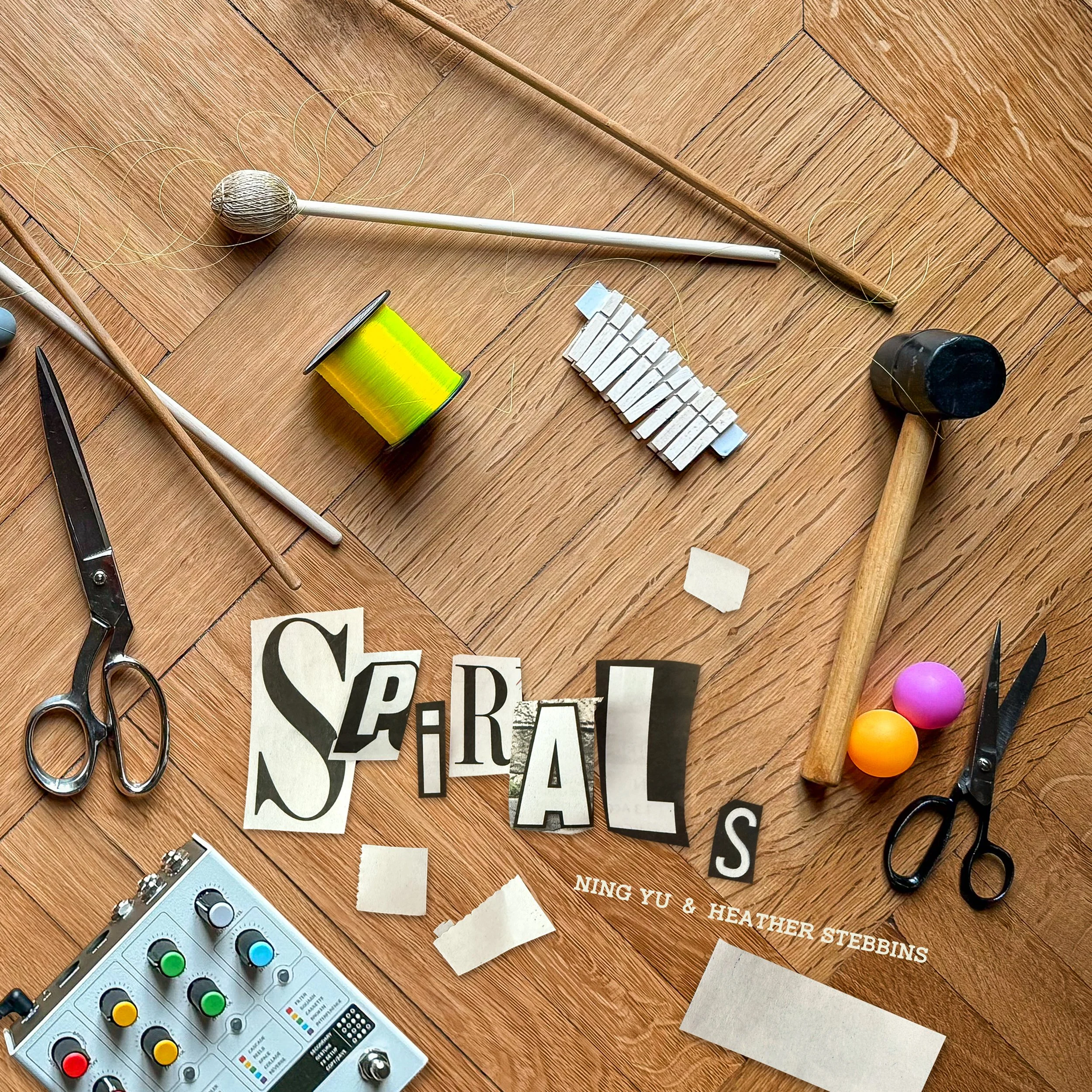
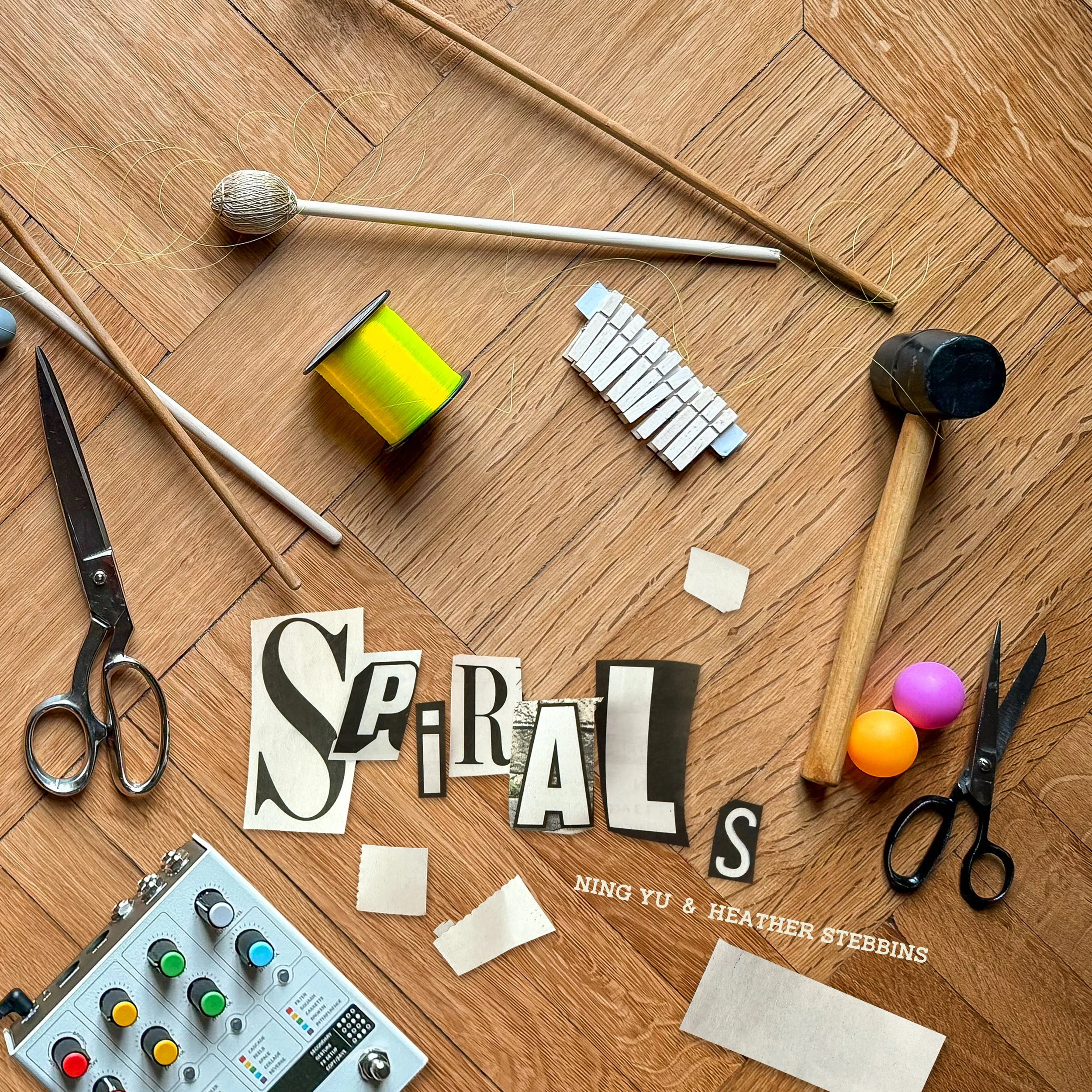
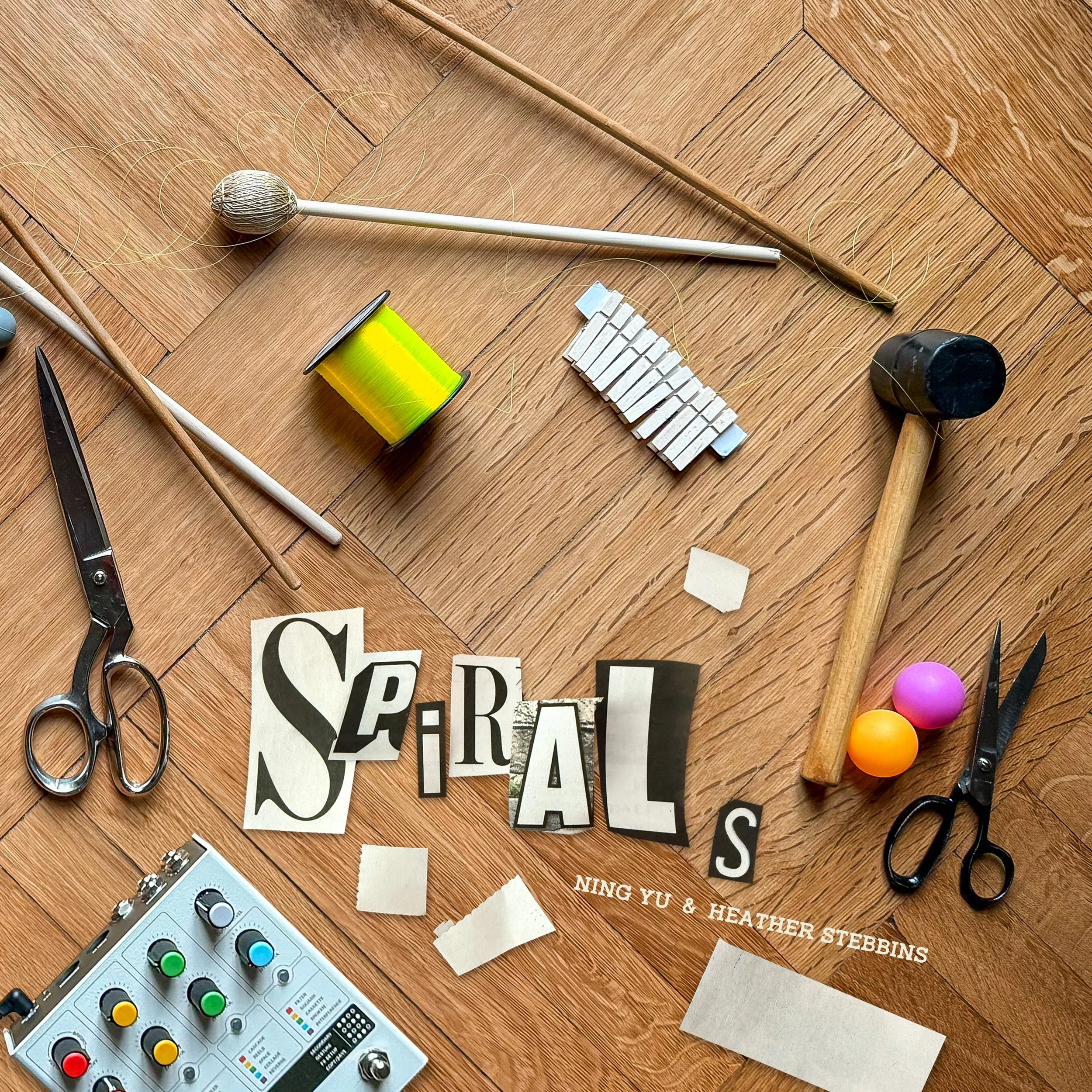
Pianist Ning Yu and sound artist Heather Stebbins performed their collaborative project, Spirals, live at the KM28 venue in Berlin on May 27, 2026.
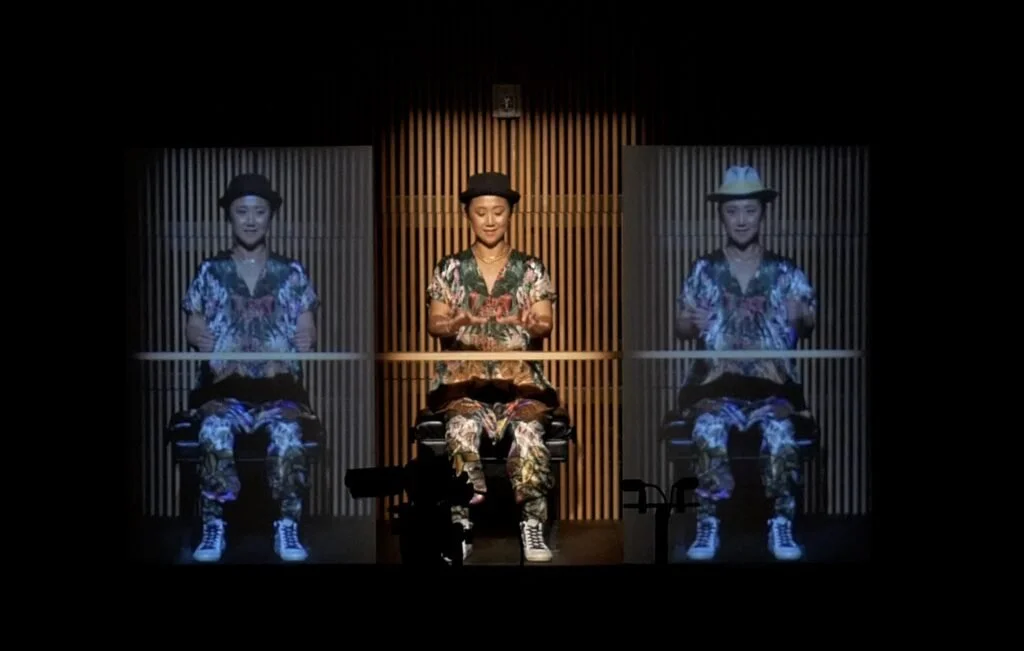
Key Jack is a virtuoso concert and a magic trick for the eyes and ears. There sits the pianist Ning Yu in front of a keyboard. She plays – but the keys suddenly have ideas of their own! They clatter and click and seem to say: "Thank you, now we'll make the music ourselves."
Otherwise, everything seems quite normal, except that the pianist has been multiplied via video. She appears on screens to the left and right, and a fascinating interplay between reality and fiction begins. She and her two video selves play a highly virtuosic, six-hand piano piece together, and only a wandering hat helps the audience keep their bearings in this simple yet difficult-to-decipher illusion show.
Key Jack skillfully combines movement, image, and sound in new ways, unsettling even the most attentive viewers and playfully subverting the boundaries between reality and fiction. Composer Michael Beil breaks with traditional concert conventions and, in this nearly 15-minute performance, thoroughly dismantles the usual notion of the musician's relationship to their instrument. The result is a captivating performance that almost makes you forget there's no piano present!
Crash! A grand piano falls – in the film, of course! – from a height of eight meters. In impressive slow motion, you see wood splinters fly and strings snap. And while this video plays above the stage, the American pianist Ning Yu sits calmly at a freshly tuned grand piano – ready to play both instruments simultaneously.
What looks dramatic is actually a playful, imaginative moment conceived by composer Simon Steen-Andersen. The piece is an invitation to rediscover sound – with humor, energy, and a great deal of curiosity. While the broken instrument in the video crackles, scrapes, and clatters, the intact piano on stage produces well-tempered tones. Together, they form a super-instrument, to which the NDR Radiophilharmonie, under the direction of the captivating guest conductor Vimbayi Kaziboni, listens intently – and responds with its own sonic ideas, noises, and melodies.
This concert is an adventure for young and old alike: colorful, surprising, and full of moments that will make you marvel, smile, and laugh. Ideal for curious children and families, and for anyone who wants to experience music in a completely different way.
The sound of a dog’s bark is instantly recognizable. In English, it’s “woof woof.” In Spanish, it’s “guau-guau.” In Japanese, it’s “wan-wan.” But what is it in music, specifically through the piano? For that we turn to Alec Hall’s A Dog Is a Machine for Loving.
This piece is what happens when a composer spends a decade listening—really listening—to the dogs in his life. Over the course of six movements, we are introduced to a cast of unforgettable canine characters. There’s Mabel, whose contented moans inspire tender pet names from the pianist; Merckx, who somehow has Schubert hiding in his bark; Buddy and Piper, whose sniffing and yapping get transcribed note-for-note into the piano; and Mathilda, whose play-fighting with a frisbee escalates just a little too far. Along the way, there are the freely roaming dogs of Sagres, Portugal—whose late-night chorus sparked the whole project—and the buzzing soundscape of two New York City dog parks.
The piece was written for a speaking pianist, but in this performance the roles are divided: Ning Yu takes the piano, while Vinson Cunningham, staff writer for The New Yorker, handles all the speaking—narrating, lecturing on canine behavior, scolding, cooing, and carrying on full conversations with the dogs on the recordings. The piano, meanwhile, acts as a kind of translator, converting the actual acoustic pawprint of each dog’s voice into playable music. The result is funny, tender, surprising, and genuinely unlike anything else in the concert hall.
Where better to showcase this piece than the Museum of the Dog—one of the only venues in the world devoted entirely to celebrating our longest companions. Guests are warmly invited to linger after the performance for a reception with composer Alec Hall and the performers. It will offer a chance for humans and dogs alike to continue the conversation, compare notes, and perhaps provide a bark or two of appreciation.
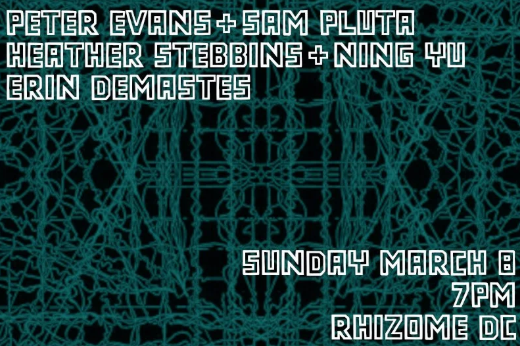
Peter Evans (trumpet) and Sam Pluta (electronics) have been collaborating since 2008 in a wide variety of contexts. Their work together has spanned small Jazz groups, large wind ensembles, through-composed works by themselves and others, and in educational contexts in the fields of improvisation an electro-acoustic music. Their work together has been featured in the Peter Evans Quintet and Octet, Rocket Science (with Craig Taborn and Evan Parker), Parker's USA Electro-Acoustic Septet, International Contemporary Ensemble and the Wet Ink Ensemble. They have performed at major festivals and venues across Europe, Canada and USA, and have presented their work and ideas at several major colleges and universities.
In the duo format Pluta and Evans use all they have developed from their experience together to forge a new and dynamically interactive music, persistently honing and refining their duo music into a fully formed type of electro-acoustic chamber music. Improvisation and a commitment to the explosive energy of sound itself informs the duo's approach to real time composition.
Their music bridges Evans' efforts to explore new sonic worlds for a traditional acoustic instrument with Pluta's customized and highly flexible software. Their instruments are at some points fused into a unified sonic entity indistinguishable as two voices, while at others engaged in violent counterpoint.
Heather Stebbins is a DC-based composer and multi-instrumentalist whose work explores the porous boundary between memory and emotion. She foregrounds cello, synthesizer, and an array of other electronics, creating music that is imbued with patience, unfolding slowly over the course of multi-movement suites. Her new album, On Separation, was released by Outside Time in May.
Praised by The New York Times for her 'taut and impassioned performance,' pianist Ning Yu emerges as one of the most compelling voices in contemporary music. Ning brings virtuosity and adventurous spirit to a wide range of music, both in solo performances and in collaborations with some of today’s most distinguished creative artists. Ning has closely collaborated with composers Michael Beil, Brigitta Muntendorf, Annea Lockwood, Wang Lu, David Bird, Aaron Einbond, Alec Hall, and Sufjan Stevens amongst others. She has performed with ensembles AMOC, Bang on A Can All- Stars, ICE, Talea Ensemble, Signal Ensemble, Wet Ink Ensemble, counter)induction, and was a long time member of the piano/percussion quartet Yarn/Wire.
Erin Demastes is an experimental composer, performer, and sound artist. She uses everyday objects and hacked electronics for her installations and performances and subverts their use and perception with play and experimentation. By placing items in theatrical settings, Erin brings out the character of things we normally may not think twice about. In addition to her interest in physical materials, Erin works with instruction and interaction design in her scores, performances, and installations by balancing structured composition with improvisation and exploration.
Erin has presented her work at many venues including Coaxial Arts Foundation, Human Resources LA, Betalevel, Soundpedro at Angeles Gate Cultural Center, Center for New Music SF, Navel LA, Good Children Gallery New Orleans, Mills College, UC Santa Cruz, Tulane University, Rice University, University of Texas at Austin, Towson University, and University of South Carolina and has performed at the High Zero Festival, MOCA, Automata, The Feminist Center for Creative Work, Santa Monica Public Library, Walt Disney Concert Hall, and more.

The Gardner’s new series, Thursday Night Music, launches with a bang. Making their Gardner debut, Ensemble Signal performs Steve Reich’s seminal minimalist work, Music for 18 Musicians.
Music for 18 Musicians is an hour-long work featuring four grand pianos, three full-size marimbas, two xylophones, three singers, clarinet, violin, and cello. Drawn from a wide variety of influences including Balinese gamelan, plainchant, and jazz, it premiered 50 years ago in 1976. Music for 18 Musicians continues to loom large in today’s musical landscape; David Bowie included the 1978 recording among his 25 favorite albums of all time. This will likely be the first time the piece has been performed by a professional ensemble in Boston, just in time for the anniversary of its premiere and Reich’s 90th birthday. You won't want to miss it!
Part of UNC Chapel Hill’s 2025-2026 Conversations in Modern Music series, Spirals, for piano, pedals, and live electronics, emerged from collaborative improvisation sessions between Ning Yu and Heather Stebbins. The movements within the work each explore spirals as both a metaphor and organizing principle, drawing from the recursive nature of musical histories and influences, everyday phenomena like the static of analog radio tuning, feedback loops, and the distortions of unconventional objects placed inside the piano.
West Coast Premiere
Composed and Conducted by Matthew Aucoin
Directed by Peter Sellars
Libretto based on poems by Jorie Graham, assembled by Matthew Aucoin and Peter Sellars
If you are captivated by the grandeur of orchestral music or the powerful storytelling of opera, Music for New Bodies is an unmissable event. This ambitious work by Matthew Aucoin, with a thought provoking libretto based on poetry of Jorie Graham, and directed by the visionary Peter Sellars, features the American Modern Opera Company creating a dramatic vocal symphony of stirring intensity and powerful storytelling in the tradition of Mahler’s Das Lied von der Erde.
A “song of the earth” for the present day, Music for New Bodies confronts the most pressing questions of our era: What is the future of humanity? How have we altered our planet? And, in an age dominated by disembodied AI, how can we reclaim the value of a life lived in a mortal, embodied human form? With its stirring symphonic intensity and thought-provoking lyrics, this piece offers a deep and urgent meditation on the challenges we face as a species.
On October 23rd and 26th, counter)induction presents compelling contemporary chamber music exploring the full spectrum of human experience through sound. The program opens with Alvin Singleton's deeply moving Jasper Drag for piano, cello, and violin—a profound meditation on collective memory inscribed to James Byrd, Jr., while Suzanne Sorkin's Swept features darting clarinet lines alongside cello. The evening continues with Eric Moe's Amicable Couplings, a 2025 composition that playfully references organ and harpsichord coupling mechanisms through unusual registral doublings, followed by Douglas Boyce's the vastness hitherto spoken of is as great in one direction as in another for piano trio, drawing its title and affect from William James's his discussion of "extensity" as an "entirely peculiar kind of feeling." The program concludes with Kyle Bartlett's Dream Journal—a haunting work for cello and piano that translates the composer's dreams into music, capturing the fragmented logic of sleep where rational thought dissolves into surreal poetry. With twenty years of "fiery ensemble virtuosity" (The New York Times) and winner of ASCAP/Chamber Music America's Award for Adventurous Programming, counter)induction continues delivering world-class performances of compelling contemporary music.